
Dengue vs Malaria: Symptoms, Causes, Diagnosis, Treatment & Prevention
Dengue and Malaria are two mosquito-borne diseases that often cause similar symptoms, making it difficult to identify them in the early stages. Learn how they differ, their warning signs, available treatments, and practical prevention tips.
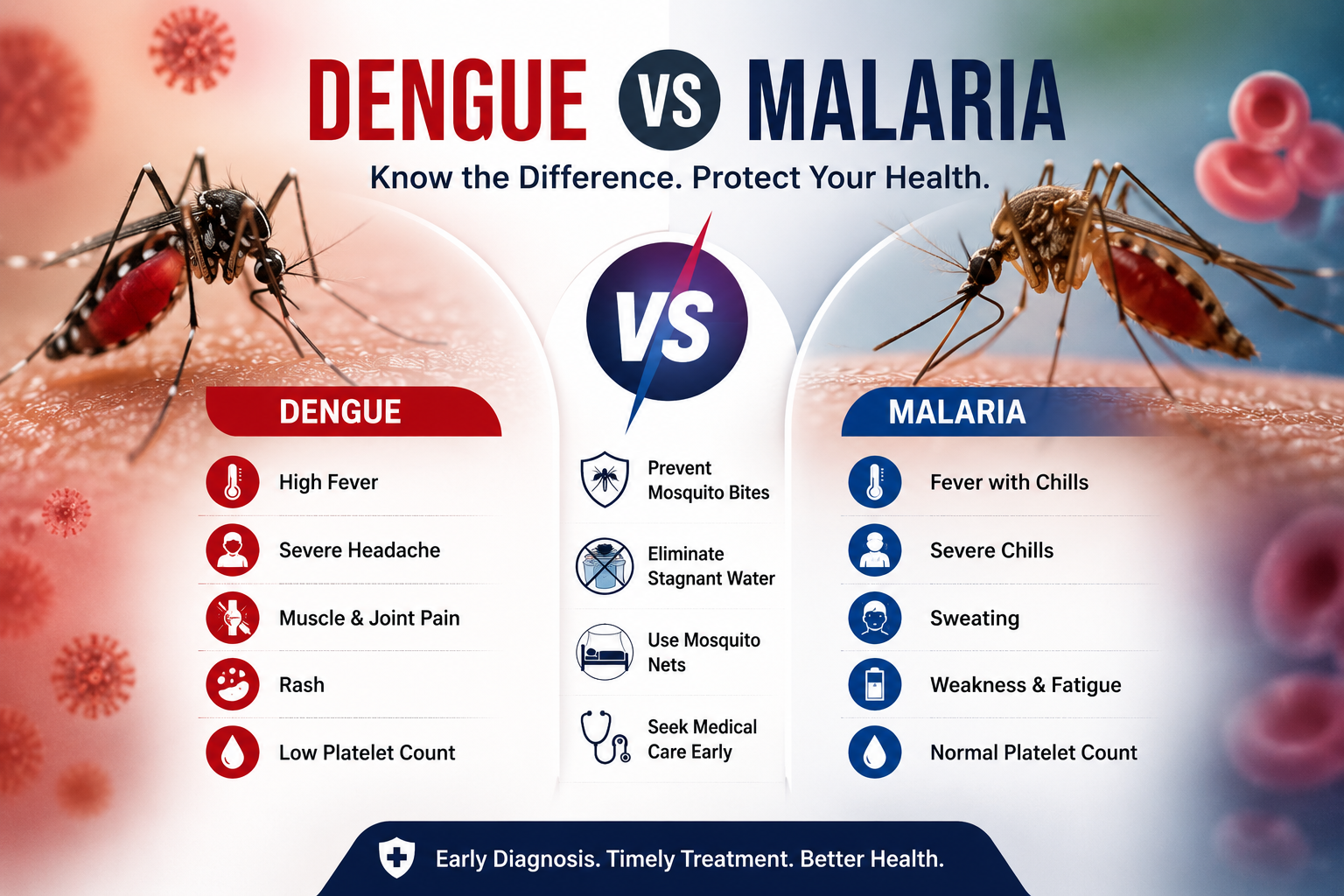
Mosquito-borne diseases continue to be one of the biggest public health concerns in many parts of the world, especially in tropical countries like India. Among them, Dengue and Malaria are the two most common illnesses that affect thousands of people every year.
Although both diseases are spread through mosquito bites and often begin with fever, they are caused by entirely different organisms and require different approaches to diagnosis and treatment. Understanding these differences can help patients seek timely medical attention and reduce the risk of complications.
In this article, we'll explore everything you should know about Dengue and Malaria, including their symptoms, causes, diagnosis, treatment options, and prevention methods.
What is Dengue?
Dengue is a viral infection caused by the Dengue virus (DENV). It spreads through the bite of an infected Aedes aegypti mosquito, which usually bites during the daytime.
There are four different types of dengue viruses, meaning a person can become infected more than once during their lifetime.
Most people recover within one to two weeks, but severe dengue can lead to internal bleeding, organ damage, and life-threatening complications if not treated promptly.
What is Malaria?
Malaria is a parasitic disease caused by Plasmodium parasites, which spread through the bite of infected female Anopheles mosquitoes.
Unlike dengue, malaria parasites multiply inside red blood cells and can affect several organs if treatment is delayed.
Malaria is completely curable when diagnosed early and treated with the appropriate anti-malarial medications.
Dengue vs Malaria: Key Differences
| Feature | Dengue | Malaria |
|---|---|---|
| Cause | Dengue Virus | Plasmodium Parasite |
| Mosquito | Aedes mosquito | Anopheles mosquito |
| Mosquito Bite Time | Daytime | Nighttime |
| Fever Pattern | Continuous high fever | Fever with chills in cycles |
| Platelet Count | Often decreases significantly | Usually normal or mildly reduced |
| Chills | Less common | Very common |
| Body Pain | Severe muscle and joint pain | Moderate body pain |
| Rash | Common | Rare |
| Treatment | Supportive care | Anti-malarial medicines |
Common Symptoms of Dengue
Symptoms usually appear 4–10 days after the mosquito bite.
Common symptoms include:
- High fever
- Severe headache
- Pain behind the eyes
- Muscle pain
- Joint pain
- Skin rash
- Nausea and vomiting
- Fatigue
- Low platelet count
In severe cases, patients may experience:
- Bleeding gums
- Nose bleeding
- Blood in vomit or stool
- Severe abdominal pain
- Difficulty breathing
These symptoms require immediate medical attention.
Common Symptoms of Malaria
Malaria symptoms generally appear 7–30 days after infection.
Common symptoms include:
- High fever
- Severe chills
- Excessive sweating
- Headache
- Muscle pain
- Weakness
- Nausea
- Vomiting
- Loss of appetite
The classic malaria pattern often follows a cycle of:
- Chills
- High fever
- Heavy sweating
How are Dengue and Malaria Diagnosed?
Doctors usually recommend laboratory tests to confirm the infection.
Dengue Tests
- NS1 Antigen Test
- Dengue IgM & IgG Antibody Test
- Complete Blood Count (CBC)
- Platelet Count
Malaria Tests
- Peripheral Blood Smear
- Rapid Malaria Antigen Test (RDT)
- Complete Blood Count
- Parasite Identification
Early diagnosis helps begin appropriate treatment before complications develop.
Treatment Options
Dengue Treatment
Currently, there is no specific antiviral medication for dengue.
Treatment mainly focuses on:
- Adequate hydration
- Rest
- Fever control using Paracetamol
- Regular monitoring of platelet count
- Hospitalization in severe cases
Patients should avoid self-medicating with painkillers such as ibuprofen or aspirin unless advised by a healthcare professional, as they may increase the risk of bleeding.
Malaria Treatment
Malaria can usually be cured using prescription anti-malarial medications.
Treatment depends on:
- Type of malaria parasite
- Severity of infection
- Patient's age
- Overall health condition
Completing the full course of medication is essential to prevent recurrence and drug resistance.
How to Prevent Dengue and Malaria
Simple preventive measures can significantly reduce the risk of infection.
Protect Yourself from Mosquito Bites
- Use mosquito repellents.
- Wear full-sleeved clothing.
- Sleep under mosquito nets when needed.
- Install window screens.
- Keep doors and windows closed during peak mosquito activity.
Eliminate Mosquito Breeding Sites
- Do not allow water to collect in coolers, flower pots, buckets, or tires.
- Clean water storage containers regularly.
- Cover overhead tanks properly.
- Maintain clean surroundings.
Community participation plays an important role in preventing mosquito-borne diseases.
When Should You Consult a Doctor?
Seek medical attention immediately if you experience:
- Fever lasting more than two days
- Persistent vomiting
- Difficulty breathing
- Severe abdominal pain
- Confusion or excessive weakness
- Bleeding from the nose or gums
- Very low urine output
- High fever accompanied by chills
Early diagnosis improves recovery and helps prevent serious complications.
Frequently Asked Questions (FAQs)
Can Dengue and Malaria occur together?
Yes. Although uncommon, a person can be infected with both diseases simultaneously, making laboratory diagnosis extremely important.
Which disease is more dangerous?
Both illnesses can become serious if treatment is delayed. Early diagnosis greatly improves outcomes.
Does every mosquito spread Dengue or Malaria?
No. Only infected mosquitoes carrying the virus or parasite can transmit these diseases.
Can Dengue spread from one person to another?
No. Dengue does not spread through direct human contact. It spreads through infected mosquitoes.
Is Malaria completely curable?
Yes. Most cases of malaria can be cured successfully with timely diagnosis and appropriate medication.
Conclusion
Dengue and Malaria may begin with similar symptoms, but they are very different diseases that require different treatments. Recognizing the warning signs early, getting tested promptly, and following medical advice can prevent serious complications.
Maintaining good hygiene, preventing mosquito breeding, and protecting yourself from mosquito bites remain the most effective ways to reduce the risk of both diseases.
At TAKMEDI, we believe that accurate health information empowers people to make informed decisions about their well-being. Always consult a qualified healthcare professional if you experience persistent fever or other concerning symptoms.